
How can my business start applying AI in 2026?
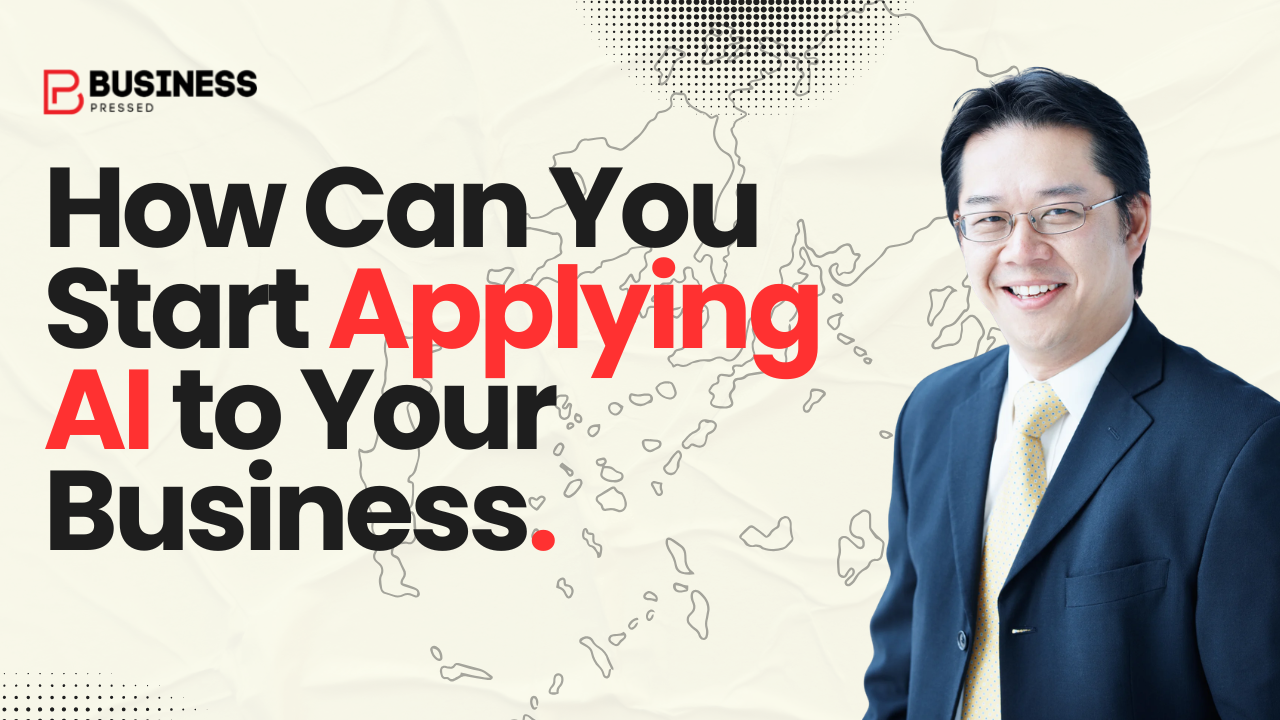
Your business can start applying AI in 2026 by identifying one specific operational process that is repetitive, time-consuming, and clearly defined, then testing an AI tool against that single process before expanding. The most successful approach starts with a clear business problem, not the technology itself. According to research referenced by Liam Ottley, this strategy separates the 5% of companies seeing a strong return from the 95% that fail.
Table of Contents
- What is the first step to take before choosing an AI tool?
- Which business tasks can AI handle most effectively right now?
- How can AI improve customer service and sales?
- How does AI help with data analysis and decision making?
- What are the risks of using AI without a formal strategy?
- How can businesses measure the success of their AI implementation?
- How will AI change the way customers find businesses online?
- What should a business do to prepare its team for AI adoption?
- Key Takeaways
- References
What is the first step to take before choosing an AI tool?
The first step is to map your existing workflows and identify where staff time is being drained by repetitive tasks, not to select software. According to IUK Business Connect, a beginner’s guide to AI for business transformation recommends pinpointing specific areas where AI can add value to operations before anything else.
Look for “quick wins” or “layups” in admin, sales, or customer service. These are tasks that are rule-based, frequent, and currently handled manually. Invoice chasing, appointment scheduling, and responding to common customer queries are typical examples.

Most businesses have scattered data and disconnected apps that do not talk to each other, according to Liam Ottley. Auditing these processes is critical before any AI implementation. You need to understand how information flows through your business before you can automate any part of it.
Getting hyped about a new tool and diving straight into development is the primary reason AI initiatives fail. CEIBS Europe advises defining clear business objectives and assessing data readiness before choosing the right approach. The process must come first, and the technology second.
Which business tasks can AI handle most effectively right now?
AI can handle invoice processing, contract analysis, procurement workflows, and compliance documentation most effectively right now. According to Soapbox Digital Media, these are among the most common AI business applications because they involve structured data and repeatable steps.
The simplest starting points are drafting emails, creating social posts, summarising research, and organising customer data. Reddit’s Growth Hacking community confirms that letting AI handle these routine content tasks is the easiest entry point for most businesses.

AI can also streamline scheduling, stock management, document processing, and email sorting. Upwork reports that AI automation maximises productivity and reduces the risk of human error in business operations.
The time savings are substantial. According to Soapbox Digital Media, a task that used to take an afternoon for content creation can now be done in twenty minutes with AI. ELO Digital Office recommends starting with content creation, then moving to customer service, operations, and data analysis.
How can AI improve customer service and sales?
AI can improve customer service by handling common questions about products, pricing, and opening hours without human involvement. According to Soapbox Digital Media, AI-powered chat solutions like Tidio, Intercom, and Drift allow businesses to set up automated chat on their website.
Modern AI assistants can understand context, pull information from a website and knowledge base, and know when to hand over to a real-life person. This means customers get instant answers for routine queries while complex issues still reach a human agent.
AI call answering systems are one of the most common AI use cases because the benefits are immediate and measurable. Businesses can see reduced missed calls and faster response times within days of implementation.
For sales, AI can automate lead management by adding enquiries to a CRM, sending confirmation emails, creating follow-up tasks for the team, and logging lead sources for reporting. HubSpot notes that startups can use AI tools to identify prospects, partners, and new markets while managing accounts at scale.
How does AI help with data analysis and decision making?
AI helps with data analysis by allowing users to ask questions in plain English and receive trend insights from spreadsheets of sales data. According to Soapbox Digital Media, AI tools can analyse spreadsheets and pull out trends that would take hours to identify manually.
Google Analytics 4 uses machine learning to surface predictive analytics, such as which customers are most likely to buy again or which pages on a site are underperforming. This moves reporting from historical to forward-looking.
AI transcription tools can transcribe meetings and produce summaries with action points. This ensures that decisions and follow-up tasks are captured accurately without someone taking manual notes.
According to IBM, teams are using AI to improve decision-making and manage operations more effectively. These capabilities help businesses move from reactive reporting to proactive decision-making, identifying opportunities before they become obvious.
What are the risks of using AI without a formal strategy?
The risks include human barriers to adoption, data leaks, and damaged brand reputation. According to Liam Ottley, there are human barriers to AI adoption within teams of emotional and fearful humans that companies are often not aware of.
Employees are secretly using AI tools to get parts of their work done without telling the company. This creates significant risks of data leaks and privacy breaches, as sensitive business information may be entered into unauthorised platforms without oversight.
Publishing AI outputs without editing will cause audiences to notice and Google rankings to suffer. Soapbox Digital Media warns that AI content needs editing, often a lot of editing, to hold a brand’s voice, expertise, and knowledge of customers.
A study from MIT, referenced by Liam Ottley, shows that 95% of AI initiatives in businesses fail to deliver a return on investment. The difference between the 5% succeeding and the 95% failing is that successful companies start with a process, not the technology.
How can businesses measure the success of their AI implementation?
Businesses can measure success by tracking metrics against the specific operational goals defined before implementation, not just the technology output. According to Upwork, AI automation should be measured on productivity gains and reduced human error.
Track time saved on repetitive tasks, reduction in human error, and improvements in customer response times. These are tangible metrics that connect directly to operational efficiency and customer satisfaction.
Successful companies take a holistic approach to opportunity identification, finding quick wins that drive immediate ROI. IBM confirms that while early AI initiatives focused on automating routine tasks, today’s applications help businesses address more complex challenges.
OpenAI has launched its own consulting team, admitting that AI implementation takes real human skill to get right, according to Liam Ottley. This signals that even the companies building AI tools recognise implementation expertise as a distinct requirement.
How will AI change the way customers find businesses online?
AI will change how customers find businesses because Google’s AI Overviews now appear on roughly half of all searches, summarising information from websites at the top of results pages. According to Soapbox Digital Media, this shift means traditional click-through behaviour is already changing.
ChatGPT and Perplexity are being used as search engines in their own right, with users asking direct questions and getting answers that reference specific businesses. This represents a fundamental shift in how potential customers discover companies.
Generative engine optimisation (GEO) is a new field focused on structuring content so it is picked up and understood by AI tools. GEO differs from traditional SEO because it prioritises clarity, factual accuracy, and structured information that AI systems can extract and cite.
Businesses must adapt their digital presence to remain visible as traditional search behaviour shifts. Business Pressed covers how companies are responding to these changes in digital visibility and brand presence.
What should a business do to prepare its team for AI adoption?
A business should educate and upskill its workforce before rolling out any AI tools. According to IUK Business Connect, workforce education is an essential step in AI adoption.
Define clear business objectives and assess data readiness before choosing the right approach. CEIBS Europe lists these as strategic steps that must come before tool selection.
Prioritising ethics and compliance builds trust with both employees and customers. This includes being transparent about how AI is used and what data it processes.
Address employee fear directly by showing how AI will handle mundane tasks, allowing staff to focus on higher-value work. When teams understand that AI removes drudgery rather than replacing roles, resistance decreases significantly.
Key Takeaways
- The most successful AI strategies start with a specific business process, not with the technology itself.
- Invoice processing, contract analysis, and compliance documentation are among the most common and effective AI business applications.
- AI-powered chat and call answering systems deliver immediate, measurable benefits for customer service teams.
- Employees using unauthorised AI tools create significant data leak risks for companies.
- Publishing unedited AI content will damage a brand’s voice and cause Google rankings to suffer.
- Google’s AI Overviews now appear on roughly half of all searches, changing how customers find businesses.
- Educating and upskilling the workforce is a critical step before any AI implementation begins.
References
- AI in Business: How Businesses Are Using AI in 2026 – Upwork
- How to Automate Any Business With AI in 3 Steps – Liam Ottley — published 2025-09-07
- The most valuable AI use cases for business – IBM — published 2024-02-13, updated 2026-06-03
- How To Use AI in Business – Soapbox Digital Media — published 2026-03-23
- How do I start using AI for my business? – Reddit
- Different Ways to Use AI in Your Business – ELO Digital Office
- A beginner’s guide to AI for business transformation – IUK Business Connect
- How to Use AI For Business Development and Startup Growth – HubSpot
- How to Use AI in Business: 5 Strategic Steps – CEIBS Europe
news via inbox
Sign up to our newsletter to receive the latest news straight to your inbox
