AI adoption in business has moved decisively from experimentation to operational scaling, but measurable financial impact remains concentrated among a small group of high performers. Productivity gains are now widespread across organisations, yet the gap between leaders and laggards is widening across agentic tools, governance, and workforce strategy. The evidence from 2026 points to a maturing technology with uneven distribution of returns.
Table of Contents
- How widespread is AI adoption across businesses in 2026?
- Are businesses actually seeing a return on their AI investments?
- What is driving the growth of AI agents in large enterprises?
- How are businesses approaching AI governance and risk management?
- What is the impact of AI on jobs and the workforce?
- What are the main barriers preventing businesses from scaling AI?
- How is physical AI changing business operations?
- What are the most effective ways to close the AI skills gap?
- Key Takeaways
- References
How widespread is AI adoption across businesses in 2026?
AI adoption has reached near-universal penetration across business functions. Nearly nine in ten respondents report regular use of AI in at least one business function, according to McKinsey. This indicates that AI has moved beyond pilot programmes into everyday operational use for most organisations.

Enterprise-wide deployment is also accelerating. Forty-four percent of respondents report that AI is scaling across their enterprise, up from 38 percent a year ago, according to McKinsey. The shift from departmental experimentation to broader organisational rollout marks a significant change in how businesses approach the technology.
Worker access to AI rose by 50 percent in 2025, according to Deloitte. Tool availability is no longer the primary constraint for most employees. The share of organisations still in the earliest Curiosity or Understanding phases has fallen to just 12 percent, according to SmarterX, down from 43 percent in the Integration or Transformation phases reported in 2025.
Are businesses actually seeing a return on their AI investments?
The financial returns from AI have plateaued rather than accelerated. Thirty-seven percent of respondents attribute at least some EBIT impact to AI use, roughly the same share as the previous year, according to McKinsey. This suggests that while adoption continues to grow, converting usage into measurable profit improvement remains challenging.
The proportion of AI high performers has remained flat at about 6 percent of all respondents, according to McKinsey. These high performers are defined as those attributing at least 5 percent of EBIT to AI use and describing the impact as significant. The concentration of financial benefit among a small group indicates that most organisations are still working through the operational changes needed to capture value.
Productivity gains are far more widespread than direct financial returns. Sixty-six percent of organisations report achieving productivity and efficiency gains, while 53 percent report enhanced insights and decision-making, according to Deloitte. Revenue growth remains elusive, with only 20 percent of organisations reporting increased revenue from AI today, yet 74 percent hope to grow revenue through AI initiatives in the future, according to Deloitte.
What is driving the growth of AI agents in large enterprises?
Large enterprises are scaling AI agents at nearly double the rate of smaller organisations. Forty percent of respondents from large organisations with annual revenues over $1 billion report scaling AI agents, up from 27 percent last year, according to McKinsey. The share of respondents from smaller organisations reporting scaling of AI agents remained flat at 22 percent, according to McKinsey, showing a widening gap by company size.
Software coding agents are a particular focus for larger enterprises. About two in ten respondents report scaling software coding agents, rising to 31 percent at larger enterprises, according to McKinsey. The ability to build internal tools rather than purchase software is changing procurement decisions. Thirty-two percent of respondents report their organisations have decided against buying software products or features because they could be built internally with agentic coding tools, according to McKinsey.
How are businesses approaching AI governance and risk management?
Governance remains the weakest area of AI maturity for most organisations. Only one in five companies has a mature model for governance of autonomous AI agents, according to Deloitte, leaving most exposed to unmanaged risk as agentic systems become more capable and autonomous.
The foundational elements of AI governance are missing in many organisations. Just 13 percent of organisations have all four AI governance foundations in place: an AI roadmap, an AI council, a generative AI policy, and an AI ethics policy, according to SmarterX. Thirty-two percent of respondents report their organisation has none of the four AI governance foundations, according to SmarterX, highlighting a significant compliance gap.
The individual components of governance show varying levels of adoption. Twenty-nine percent of organisations have an AI roadmap, while 39 percent have an AI council, 48 percent have a generative AI policy, and 48 percent have an AI ethics policy, according to SmarterX. Policies are more common than strategic planning bodies, suggesting many organisations are reacting to compliance requirements rather than building proactive governance structures.
What is the impact of AI on jobs and the workforce?
Expectations of AI-related workforce declines are rising. Thirty-nine percent of respondents expect AI-related declines in their organisations’ total employment in the coming year, compared with 32 percent last year, according to McKinsey. Forty-three percent of respondents expect no AI-related change in employment, according to McKinsey, suggesting uncertainty remains widespread.
The broader sentiment about AI and jobs is notably pessimistic. Seventy-one percent of respondents believe more jobs will be eliminated by AI than created, compared with just 13 percent who expect net job creation, according to SmarterX. This macro-level concern contrasts sharply with personal expectations. Only 20 percent of respondents express concern about AI’s impact on their own role, according to SmarterX, revealing a disconnect between how workers view the technology’s impact on the labour market versus their own positions.
What are the main barriers preventing businesses from scaling AI?
The most significant barriers to AI adoption are human rather than technical. A lack of education and training (38 percent) and a lack of awareness or understanding (35 percent) are the most-cited barriers to AI adoption, according to SmarterX. Lack of time (30 percent) and fear or mistrust of AI (29 percent) are also among the top barriers, according to SmarterX, indicating cultural resistance remains significant.
Cost constraints affect a meaningful minority of organisations. About 20 percent of respondents report that AI-related operating costs, including token costs, constrained their AI use, according to McKinsey. The gap between strategic confidence and operational readiness is also notable. Forty-two percent of companies believe their strategy is highly prepared for AI adoption, but they feel less prepared in terms of infrastructure, data, risk, and talent, according to Deloitte.
How is physical AI changing business operations?
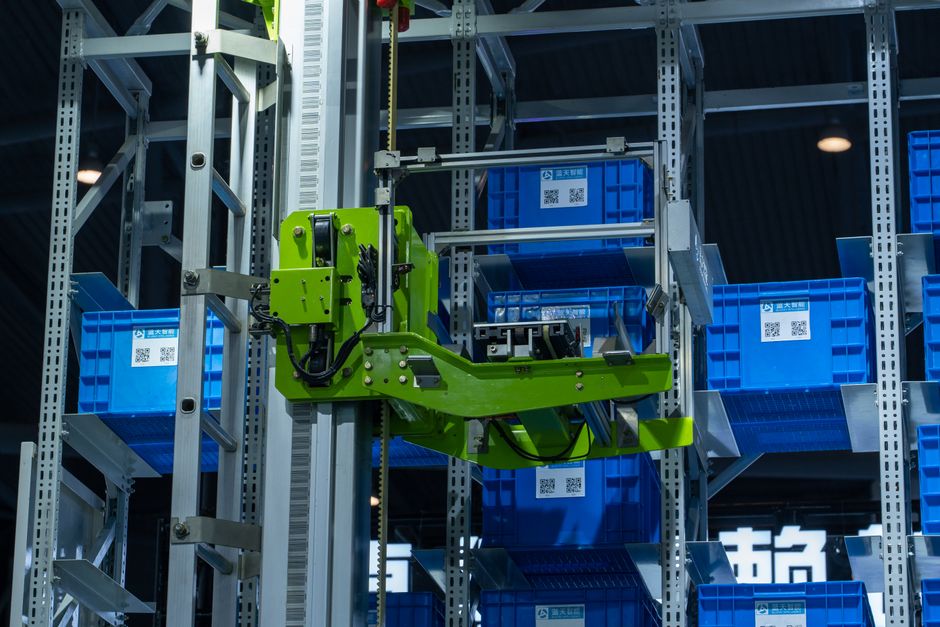
Physical AI is moving from concept to operational reality faster than many expected. More than half of companies (58 percent) report at least limited use of physical AI today, and that figure is set to reach 80 percent in two years, according to Deloitte. Asia Pacific is leading in early implementation of physical AI, according to Deloitte, suggesting regional variation in adoption timelines.
The depth of AI integration varies significantly across organisations. Thirty-four percent of surveyed organisations are starting to use AI to deeply transform, creating new products and services or reinventing core processes or business models, according to Deloitte. Thirty percent of organisations are redesigning key processes around AI, while 37 percent are using AI at a more surface level with little or no change to existing processes, according to Deloitte.
What are the most effective ways to close the AI skills gap?
The AI skills gap starts with a training deficit in many organisations. Thirty-two percent of respondents say no AI training exists at their organisation, while 18 percent say it is in development, according to SmarterX. This lack of structured learning opportunities leaves workers to develop AI skills independently or not at all.
Worker preferences point to practical, workflow-focused learning. Fifty-eight percent of workers want to learn about integrating AI tools into existing workflows, 51 percent want to learn about using AI agents, and 45 percent want to learn about building no-code assistants, according to SmarterX. Only 15 percent of workers mention prompting as a topic they want to learn, according to SmarterX, suggesting the focus has shifted from basic interaction to deeper integration.
Leadership engagement with AI varies by seniority. Sixty-five percent of CEOs, founders and presidents are in the Integration or Transformation phases of AI adoption, compared with 53 percent of directors and 48 percent of managers, according to SmarterX. Senior leaders are more likely to be personally engaged with AI, which may help drive organisational adoption when that engagement translates into training investment and strategic direction.
Key Takeaways
- AI adoption has reached near-universal penetration, with nearly nine in ten organisations using AI in at least one business function.
- The proportion of AI high performers attributing at least 5 percent of EBIT to AI has remained flat at around 6 percent.
- Large enterprises are scaling AI agents at nearly double the rate of smaller organisations.
- Only 13 percent of organisations have all four core AI governance foundations in place.
- Thirty-nine percent of respondents expect AI-related workforce declines in the coming year, up from 32 percent last year.
- Lack of training and awareness remain the top barriers to AI adoption, ahead of cost concerns.
- Fifty-eight percent of organisations report at least limited use of physical AI, with adoption expected to reach 80 percent within two years.